
11 Best AI Tools Overview: We Tested Them All for Marketers

by Mike Khorev
AI tools are no longer optional in 2026 – they’re a necessity. Your brand’s marketing success now depends on its visibility in AI-generated answers, especially with AI search reaching nearly 1 billion users and platforms like ChatGPT becoming mainstream. The numbers tell an impressive story. The global AI SEO software market will grow to $4.97 billion by 2033, a significant jump from $1.99 billion in 2024. Companies like Shopify, Instacart, and Airbnb already use AI marketing tools to stay ahead of their competition. On top of that, 75% of marketers now use AI to simplify their SEO processes. You might be wondering which AI marketing tools will work best for you. The digital world has changed dramatically. Success isn’t just about ranking pages anymore – it’s about providing the best answers on Google AI Overviews, ChatGPT, Perplexity, and Gemini. This calls for a completely different strategy. We’ve tested the top 11 AI tools for business to save you from trial and error. Our hands-on analysis shows which platforms deliver genuine value and which don’t measure up. These best AI tools for business help address a crucial fact: 88.1% of AI Overview queries are informational. This means you need a new optimization strategy.
Let’s take a closer look at the tools that will change your marketing efforts in 2026.
1. Writesonic
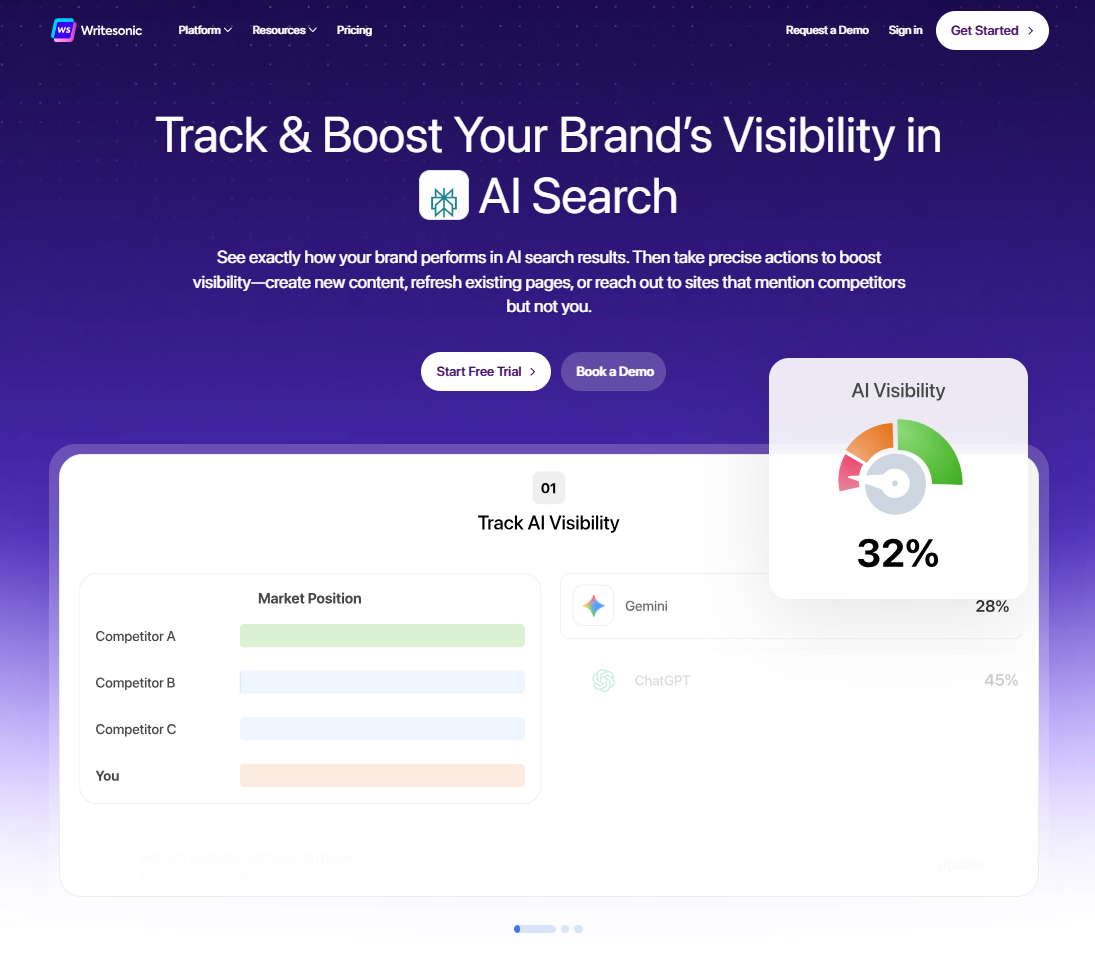
Writesonic leads AI-powered marketing solutions in 2026. This complete platform does more than simple content creation and merges traditional SEO with AI search visibility.
Writesonic Key Features
Writesonic combines content creation with search visibility tracking on major AI platforms. The platform monitors brand mentions on ChatGPT, Perplexity, Gemini, Google AI Overviews, and 10+ other AI search engines. GEO (Generative Engine Optimization) helps boost visibility in AI-generated answers – vital since 89% of B2B buyers use AI for purchase research. The platform’s AI Article Writer creates SEO-optimized content that includes automatic fact-checking and internal linking. The Site Audit tool scans technical problems, while the Action Center suggests specific fixes instead of just reports. A marketer who used Writesonic saw a 500% increase in impressions.
Writesonic Pros and Cons
Pros:
- All-in-one tool combining AI writing, SEO optimization, and visibility tracking
- Strong SEO focus with audits, keyword tools, and content optimization
- Expandable solutions from freelancers to enterprise-level teams
- User-friendly interface even for beginners
Cons:
- Credit system can feel restrictive on lower-tier plans
- Learning curve for beginners with advanced SEO features
- Full customization locked behind Enterprise plan
- Interface sometimes described as cluttered
Writesonic Pricing
Writesonic has five pricing tiers as of 2026:
- Lite: USD 49/month (USD 39/month annually) – 15 articles/month, 1 user, 1 project
- Standard: USD 99/month (USD 79/month annually) – 30 articles/month, Google Analytics integration
- Professional: USD 249/month (USD 199/month annually) – 100 articles/month, GEO tracking across ChatGPT, Perplexity, Google AI
- Advanced: USD 499/month (USD 399/month annually) – 200 articles/month, advanced GEO features, 5 users
- Enterprise: Custom pricing – Unlimited tracking, Action Center, custom dashboards
You can save about 20% with annual plans compared to monthly billing.
Writesonic Best For
Content marketers who need automation plus SEO insights will find Writesonic valuable. The platform works best for:
- Marketing teams creating content types of all sizes (blogs, ads, emails)
- SEO specialists tracking both Google and AI visibility
- Agencies managing multiple clients with varying content needs
- Businesses that want to monitor and improve their AI search presence
Writesonic provides a unified solution to boost visibility across both traditional and AI search, eliminating the need for multiple specialized tools.
2. AirOps
AirOps makes content operations simple with no-code AI workflows. This detailed content orchestration system connects human creativity with adaptable AI automation to streamline processes and boost visibility.
AirOps Key Features
The platform’s powerful Workflow Builder changes content strategies into repeatable automation. Teams can create AI workflows without writing code using a drag-and-drop interface. The Grids Content Planner works like an “editorial calendar on steroids” and lets teams plan and track content for hundreds of pieces at once. The human-in-loop review system stands out by keeping AI content from sounding generic. Teams can publish directly through WordPress, Webflow, and other major CMS platforms. The platform has Brand Kits where teams store tone guidelines and formatting rules. Teams can use the Answer Engine Visibility tool to score content for AI search readiness. The tool evaluates freshness, authority signals, and snippet extractability.
AirOps Pros and Cons
Pros:
- Saves hours on bulk content production
- Publishing straight to CMS removes manual handoffs
- Brand Kits and human review steps keep quality high
- Works with 30+ AI models and 10+ data providers
Cons:
- New users face a learning curve
- Free tier is clear but other pricing needs more detail
- Tasks (workflow executions) can get pricey
- You need a content strategy in place first
AirOps Pricing
AirOps has three main pricing tiers:
- Solo: Free plan with 1,000 tasks per month, 1 user
- Scale: Custom pricing with unlimited tasks and users, Semrush SEO data integration, secure SSO
- Enterprise: Custom pricing including everything in Scale plus multi-account CMS integrations
Additional tasks beyond your plan’s limit cost USD 9.00 per 1,000 tasks for Pro plan users and USD 6.00 per 1,000 tasks for Team plan users.
AirOps Best For
Content-heavy teams that want to scale production without losing quality will love AirOps. The platform works great for:
- SEO managers who handle lots of content refresh requests
- Content teams that know what “good” looks like but need to scale up
- Agencies managing multiple client SEO campaigns systematically
- Marketers who think in workflows rather than one-off tasks
The platform might not suit users who want a “set it and forget it” SEO tool or those new to SEO basics.
3. Rankscale.ai
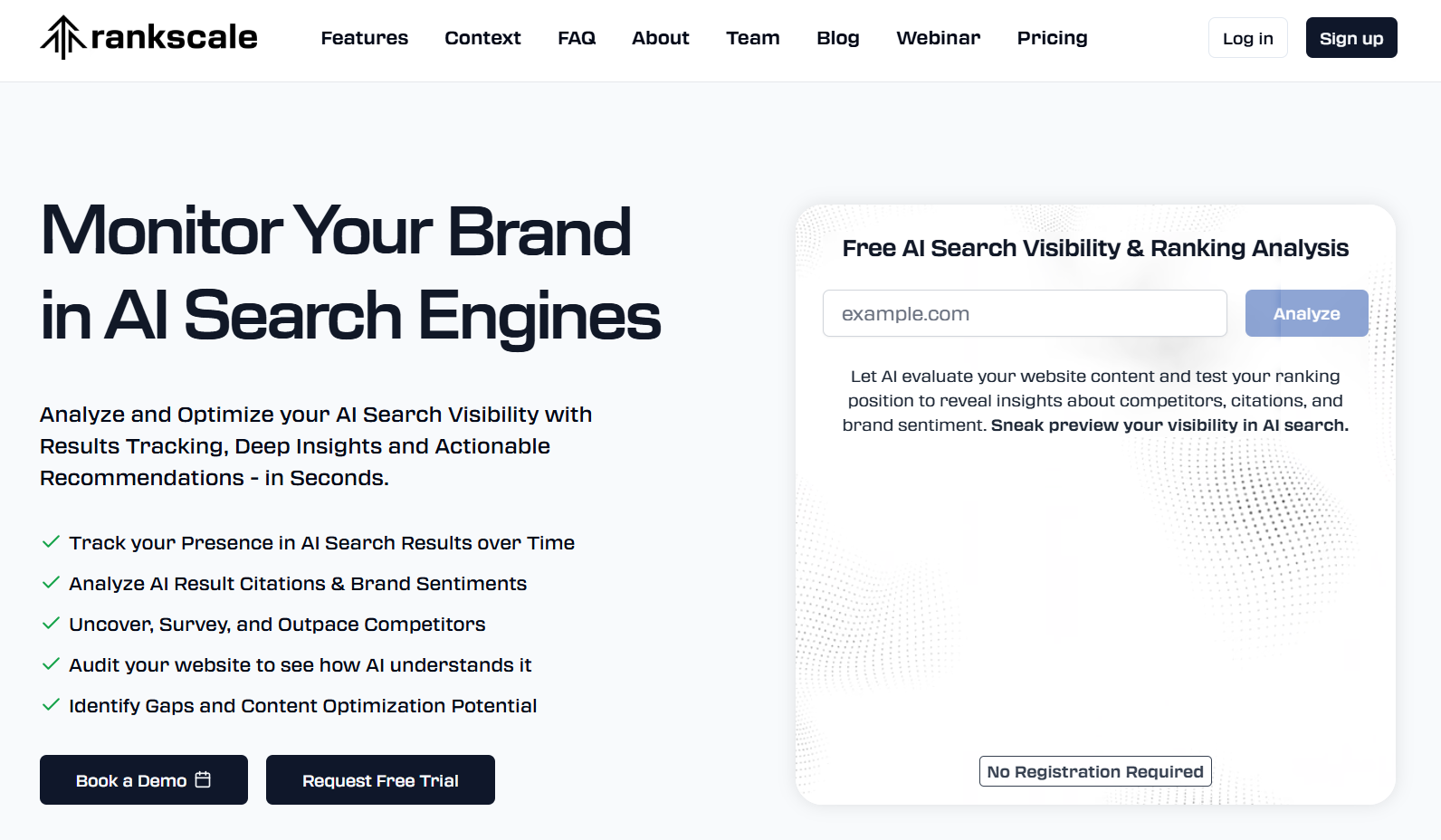
Rankscale.ai stands out as a specialized tool that helps optimize brand visibility on AI search engines. This Generative Engine Optimization (GEO) platform shows how brands perform in AI-generated responses and provides applicable information for marketers who adapt to the AI-first web.
Rankscale.ai Key Features
The platform monitors brand mentions on major AI engines like ChatGPT, Perplexity, Google AI Overviews, Gemini, Claude, DeepSeek, Mistral, Grok, and Microsoft Copilot. The Brand Dashboard combines performance metrics, competitor insights, and citation data into one central hub that works perfectly for managing multiple web properties. You’ll find the tool particularly strong at competitor analysis. It automatically spots rivals in AI search results for your tracked terms. Each competitor’s profile shows visibility scores, rank, sentiment, and citations. The citation analysis feature reveals which sources AI systems reference when discussing brands. This helps you spot influential domains that shape AI answers. The platform’s sentiment analysis delivers detailed scores for your brand and competitors through interactive word clouds that display positive, neutral, and negative keywords. Your site receives an AI readiness score (0-100%) through the Website Audit feature, along with specific recommendations to improve AI visibility.
Rankscale.ai Pros and Cons
Pros:
- The platform delivers clear value to agencies that track topic-level AI visibility on multiple engines
- Competitor citation mapping leads to specific content improvements
- Teams can collaborate and report to clients using workspaces and exports
- The accessible interface features dynamic dashboards
Cons:
- Public documentation lacks detail about methodology and refresh cadence
- Multi-engine setups need careful credit planning
- Simulation features provide directional rather than definitive guidance
- Beginners might need time to master the technical features
Rankscale.ai Pricing
Rankscale.ai’s pricing comes in three tiers:
- Essentials: $20/month with 120 credits, 10 free page audits, 5 brand dashboards, up to 480 AI responses
- Pro: $99/month with 1,200 credits, 50 free page audits, 25 brand dashboards, up to 4,800 AI responses, team workspaces with unlimited seats
- Enterprise: $780/month with 12,000 credits, 200 free page audits, 100 brand dashboards, up to 48,000 AI responses
Organizations with specific needs can opt for a custom plan.
Rankscale.ai Best For
The platform excels for agencies that manage multiple brands or topic clusters and need to demonstrate improvements in AI answer visibility. It serves perfectly for:
- Marketing teams that focus on mid-funnel comparisons where competitor citations shape AI answers
- Organizations ready to implement schema and entity fixes quickly
- Businesses looking to future-proof their SEO strategy in an AI-driven search landscape
- Teams needing detailed data about performance on multiple AI platforms
4. SE Ranking AI Overview Tracker
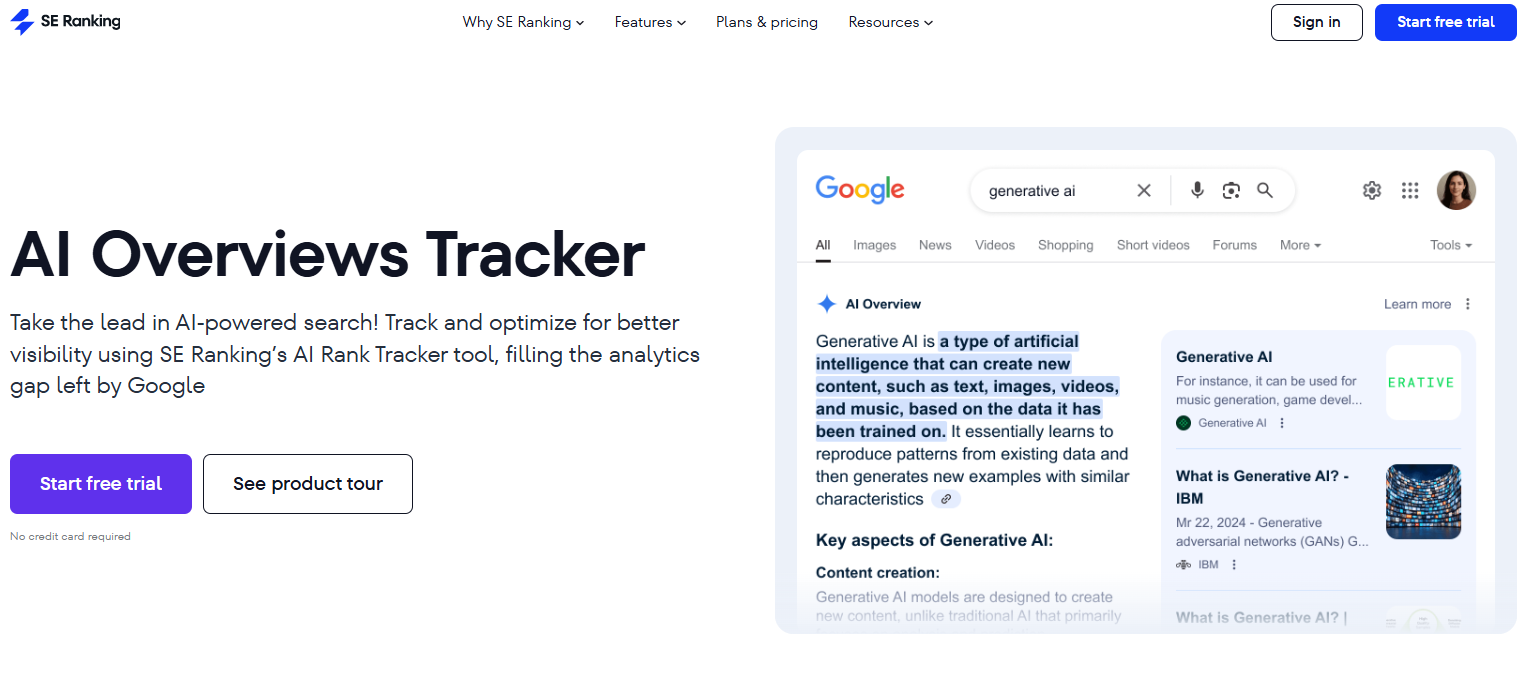
SE Ranking AI Overview Tracker will give you a direct window into your brand’s AI search presence in 2026. This complete platform tracks visibility across AI Overviews, AI Mode, and major chatbots like ChatGPT, Perplexity, and Gemini.
SE Ranking Key Features
SE Ranking’s flagship offering is the AI Search Toolkit. You can monitor AI visibility through three core components: AI Overviews Research, AI Overviews Tracker, and LLM Tracker. The platform really analyzes domains and lists links that receive traffic mentions from AI Overviews and AI snippets. SE Ranking’s Content Editor helps content creators by using AI to analyze successful competitor websites and provide detailed instructions on keywords, structure, and content parameters. You’ll get immediately usable briefs for optimized content. The integrated AI Writer makes content creation efficient with customizable tone, audience targeting, and content goals. Advanced data processing algorithms power SE Ranking’s backend to deliver insights from their massive databases: 5.4B keywords, 2.2B domain profiles, and 100% accurate keyword rankings. You get precise metrics on mentions, link presence, and average position in AI results.
SE Ranking Pros and Cons
Pros:
- Expandable pricing that fits teams of all sizes
- Accessible interface with easy navigation
- Complete platform covering both traditional SEO and AI search optimization
- High data accuracy for metrics evaluation
Cons:
- New users need time to learn all functionality
- Backlinks database smaller than some top-tier competitors
- Data presentation needs extra interpretation sometimes
- Some tasks have an awkward UI
SE Ranking Pricing
SE Ranking’s three main plans as of January 2026:
- Essential: USD 65.00/month (USD 52.00/month annually) – For individual SEO professionals
- Pro: USD 119.00/month (USD 95.20/month annually) – For agencies and small teams, has AI Search Toolkit
- Business: USD 259.00/month (USD 207.20/month annually) – For large agencies and enterprises
Users who need improved AI tracking can get the AI Search add-on for USD 89.00/month (USD 71.20/month annually).
SE Ranking Best For
SEO specialists, agencies, and in-house teams who need reliable automation will find SE Ranking extremely useful. The platform works best for:
- Digital marketing agencies managing multiple client campaigns
- Content teams tracking visibility across both traditional and AI search
- Local businesses using the Local Marketing Module
- SEO professionals who value accurate rank tracking and keyword research
Small to mid-sized agencies looking for professional SEO performance tracking and efficient workflows will find this tool particularly valuable.
5. Clearscope
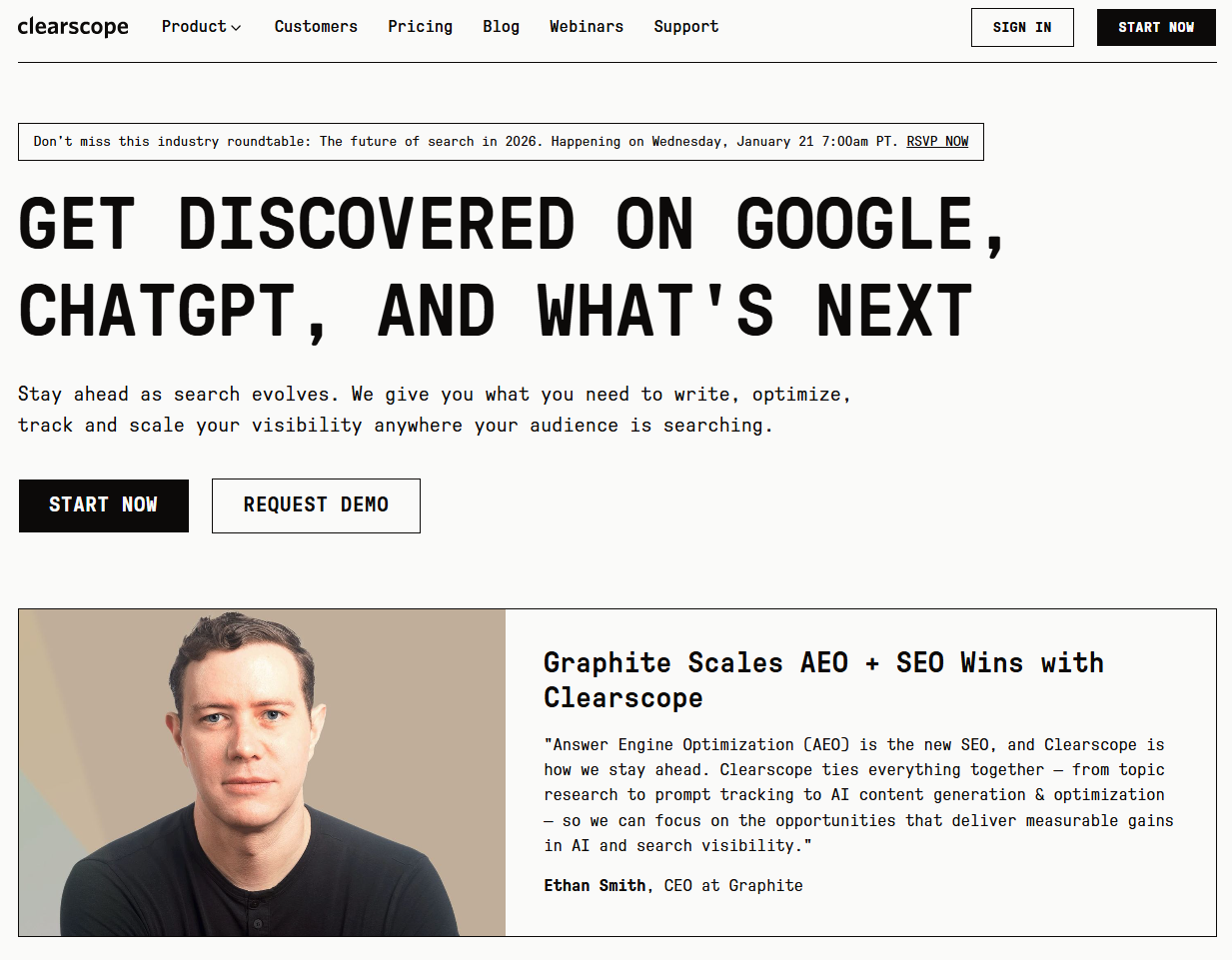
Clearscope helps marketers create better content with its specialized AI optimization tool. The platform makes your content visible on traditional search engines and AI platforms like ChatGPT.
Clearscope Key Features
The Content Editor looks at top-ranking pages and suggests the best keyword usage and structure. You can work smoothly with Google Docs, WordPress, and Microsoft Word integrations in your preferred writing environment. Content Inventory keeps track of your pages after publishing. This helps you find opportunities to refresh content and maintain rankings. The platform analyzes language patterns from top results and tells you how often specific terms should appear. The new Draft with AI feature creates first drafts from search queries, topics, or ideas. Many teams cut their content creation time by 10-20%. You can also track how visible your content is on Google and AI chatbots with Answer Engine Optimization (AEO).
Clearscope Pros and Cons
Pros:
- Teams save 1.5-3 hours per article with efficient workflows
- Beginners find the interface easy to use
- Support team provides excellent service
- Updates reflect the latest SEO trends
Cons:
- No backlink analysis tools
- Takes time to master
- Doesn’t offer free trials
- Lower plans limit you to 20 reports monthly
Clearscope Pricing
Clearscope’s pricing comes in three tiers as of January 2026:
- Essentials: USD 129.00/month includes 20 AI Tracked Topics, 20 Topic Explorations, 20 AI Drafts, 50 Content Inventory Pages
- Business: USD 399.00/month gives you 50 AI Tracked Topics, 50 Topic Explorations, 20 AI Drafts, 300 Content Inventory Pages, and a dedicated account manager
- Enterprise: Custom pricing offers tailored credits, custom agreements, crawler whitelisting, and single sign-on (SSO)
Clearscope Best For
Content teams focused on search visibility love Clearscope. Users see traffic increases of 52% when they follow the tool’s suggestions. The platform helps:
- Content marketers who want proven optimization methods
- SEO managers tracking Google and AI platform performance
- Agencies running multiple client content campaigns
- Companies preparing their content for the future
Clearscope guides you to create quality content that ranks well in both traditional search and AI-generated answers.
6. Ahrefs AI Content Helper
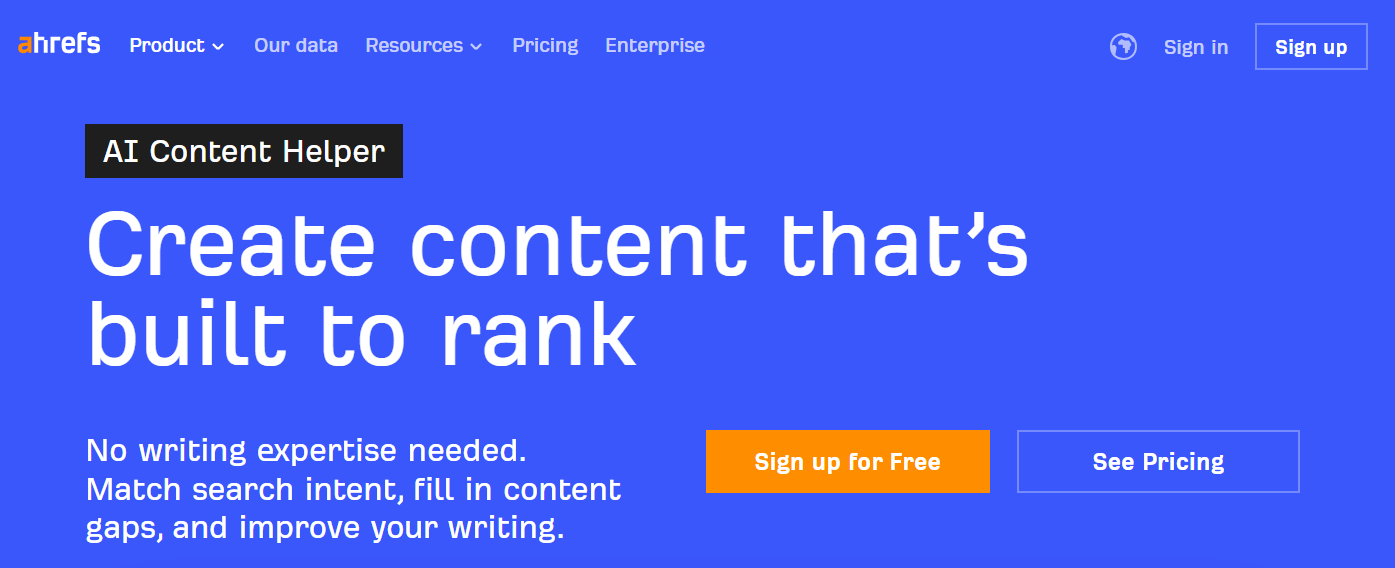
Ahrefs AI Content Helper transforms content optimization. The tool uses artificial intelligence to make your writing match search intent and top-performing competitors.
Ahrefs Key Features
The AI Content Helper matches search intent with confidence. It detects multiple intents for your keyword through AI. Your content receives grades against top-ranking pages. This helps you spot topical gaps and fill them naturally. The tool uses color-coding to highlight sentences based on covered subtopics. This feature can boost your visibility in AI search. The platform includes an AI chat that provides applicable information for content improvements. Rather than counting keyword mentions, Ahrefs identifies core topics for your target keyword. It scores how well your content covers these topics while you write.
Ahrefs Pros and Cons
Pros:
- The tool merges smoothly into the writing workflow
- You get adjacent keyword ideas from a single input, which saves research time
- It reveals search intent and related topics that users actually participate in
- Competitor analysis runs automatically without manual review
Cons:
- The price seems high with the add-on cost plus Ahrefs subscription
- Benefits change based on workflow and usage level
- Content scores need oversight and sometimes lack precision
- AI content generation quality ranks below cheaper purpose-built tools
Ahrefs Pricing
The AI Content Helper comes as a paid add-on to Ahrefs core platform:
- AI Content Helper add-on: USD 99.00 per month (50 documents/month)
- Content Kit add-on: USD 299.00 per month (250 documents/month) [272]
- Additional documents: 100 for USD 50.00 per month
Users need a base Ahrefs subscription that starts at USD 129.00 per month. The minimum combined cost reaches USD 228.00 monthly.
Ahrefs Best For
Ahrefs AI Content Helper excels for users who analyze competitor pages and data. The tool serves:
- SEO experts who already use the Ahrefs ecosystem
- Content teams that need data-backed optimization
- Marketers who want precise search intent matching
- Writers who need structured guidance while maintaining creativity
7. Whatagraph
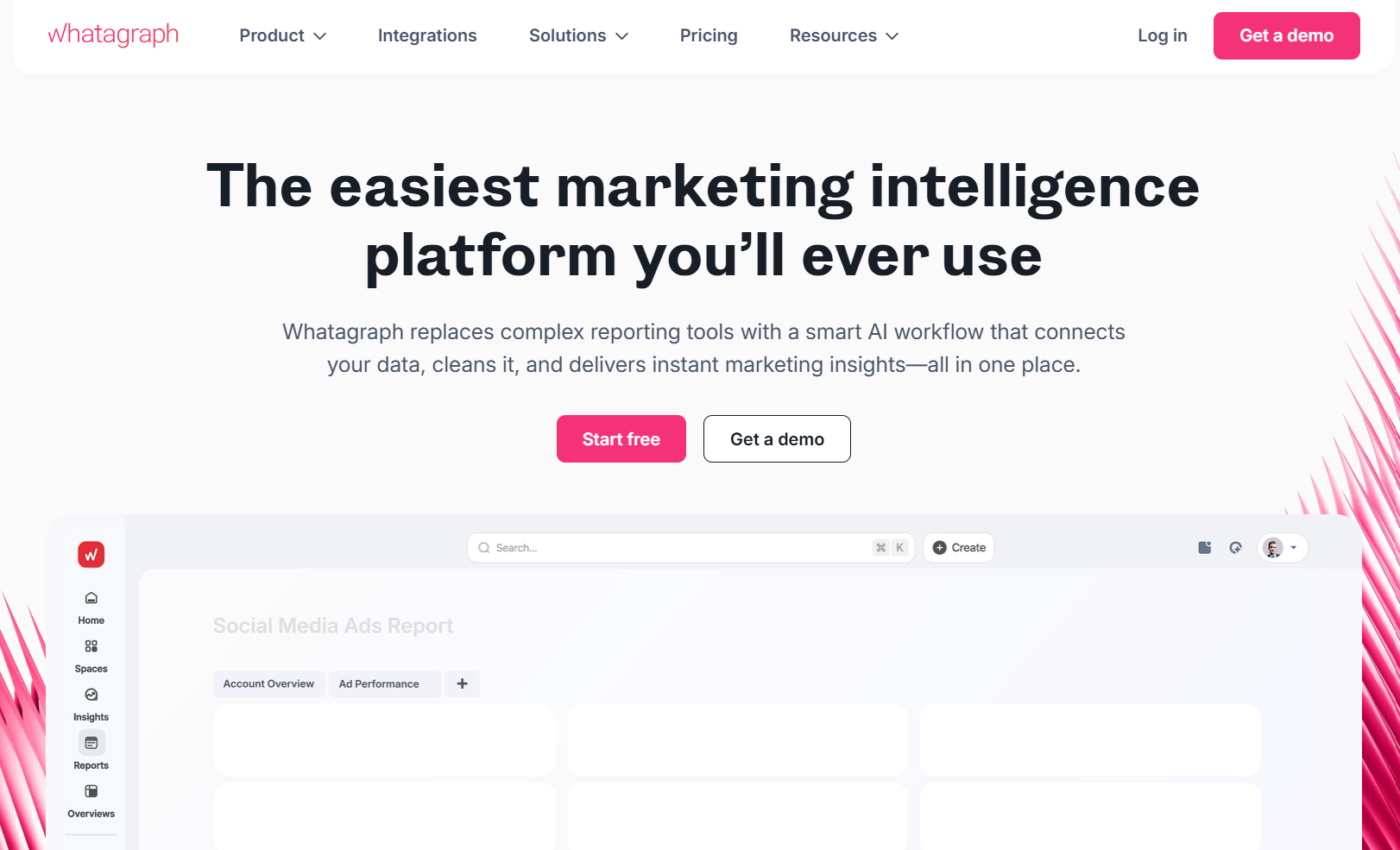
Whatagraph changes how marketers analyze data with its AI-powered marketing intelligence platform. This intelligent tool combines scattered marketing data sources into clear visual reports that reveal your campaigns’ story.
Whatagraph Key Features
AI-powered features make this platform stand out. Whatagraph IQ generates reports with a single click and IQ Chat lets you ask questions about your data with immediate answers. The Smart Builder automatically creates reports from your marketing performance data and saves countless hours of work. The platform connects 55+ marketing platforms through reliable, native integrations. Google Analytics 4, Meta, LinkedIn, Ahrefs, Shopify, and major email marketing platforms are all supported. The platform’s ability to blend custom data, metrics, and dimensions without coding is particularly useful.
Whatagraph Pros and Cons
Pros:
- Teams save up to 40 hours monthly on reporting tasks
- Client-friendly dashboards with appealing visuals
- Platform maintains 99.95% uptime
- Support team responds within seconds
Cons:
- Costs increase as you scale
- Some connectors may disconnect occasionally
- Power users face limited customization options
- New users need time to adapt
Whatagraph Pricing
Whatagraph offers four pricing tiers:
- Free: €0/month – 5 source credits, simple reporting
- Start: €199/month (annual) or €249/month – 20 source credits
- Boost: €499/month (annual) or €624/month – 60 source credits
- Max: Custom pricing – 100+ source credits, premium features
Whatagraph Best For
Marketing agencies managing client reporting at scale find Whatagraph particularly valuable. The platform serves:
- In-house marketing teams that track cross-channel performance
- Agencies needing white-labeled client reports
- Marketers who rely on visual performance tracking
- Teams looking to eliminate manual reporting work
These capabilities make Whatagraph ideal for organizations that value both time efficiency and professional presentation in their marketing analytics.
8. DataforSEO
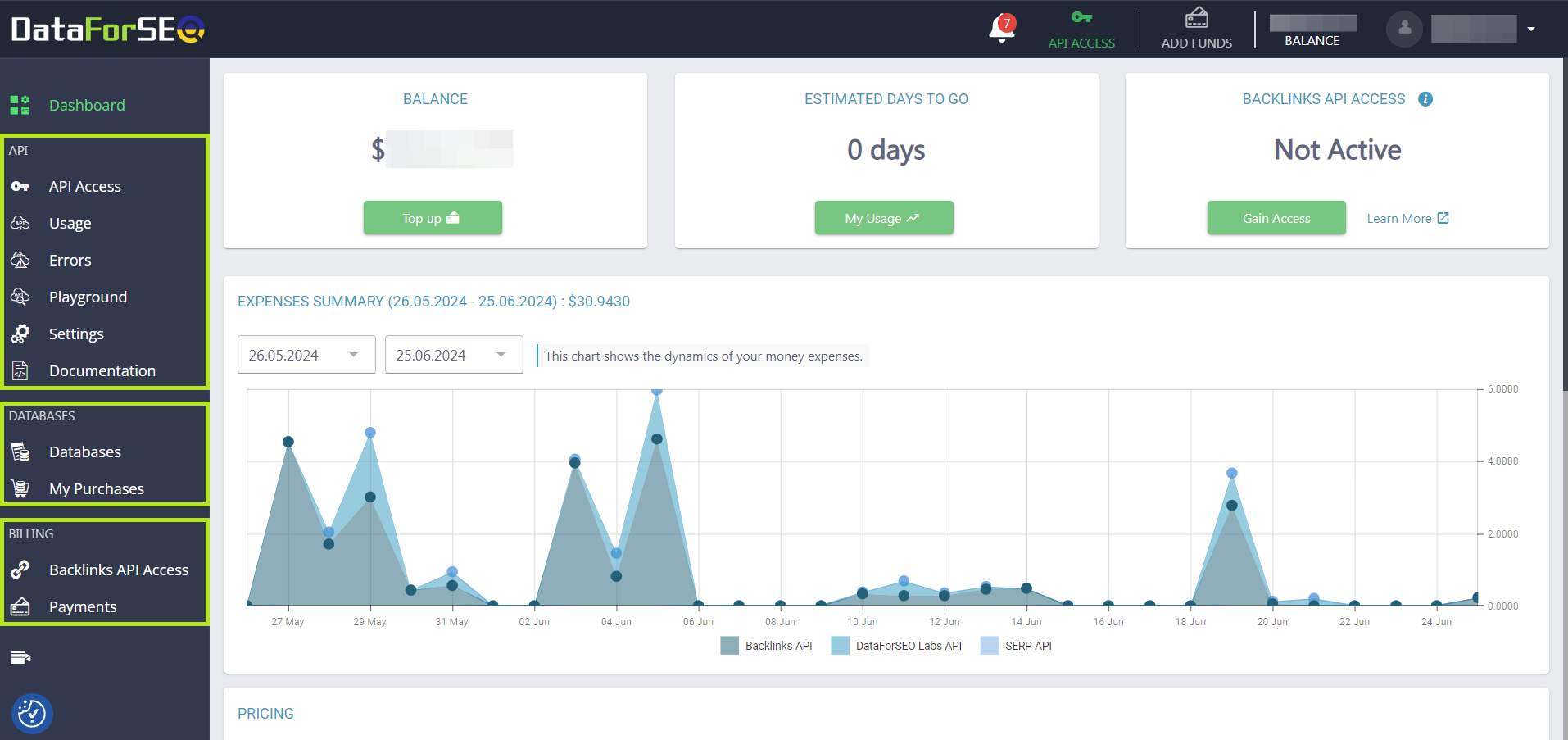
DataforSEO strengthens marketers with its complete API-first platform. The platform delivers immediate SEO data and AI optimization capabilities to marketing tool builders and agencies.
DataforSEO Key Features
DataforSEO’s AI Optimization API excels with multiple purpose-driven components. The system gives analytical insights about search volume that show how users phrase queries in AI-powered tools. Users can submit prompts and get structured responses from multiple language models like ChatGPT, Claude, Gemini, and Perplexity through a single interface.
The platform features four specialized APIs that boost AI marketing success:
- LLM Responses API generates structured responses from leading LLMs
- LLM Scraper API extracts ChatGPT search results
- AI Keyword Data API estimates search volume in AI tools
- LLM Mentions API tracks keyword, brand, and website mentions across language models
The system includes ready-made connectors that enable integration without coding. The core team responds to requests around the clock, while the well-laid-out GUI helps monitor data usage effectively.
DataforSEO Pros and Cons
Pros:
- Pay-as-you-go model eliminates subscription commitments
- Immediate data retrieval through Live method
- Extensive API selection (50+ APIs) covers all SEO aspects
- Smooth integration with tools like Make.com and Google Sheets
Cons:
- Minimum payment requirement of USD 50.00
- New developers face a learning curve
- Technical documentation can overwhelm users
- Non-technical users have limited visual dashboards
DataforSEO Pricing
The platform uses a flexible pay-as-you-go model where users pay for individual services they keep taking. Users must pay a minimum amount of USD 50.00. Each endpoint has different prices – from USD 0.60 per 1,000 SERPs to USD 0.01 per keyword search. Users can choose between Standard method (more affordable, separate POST/GET requests) and Live method (instant results, higher cost).
DataforSEO Best For
DataforSEO works best for marketing tool developers who create new products with immediate data. The platform serves:
- SEO software companies that build custom solutions
- Agencies that need white-label data for client reports
- Marketers who automate research tasks
- Organizations with analytical machine learning projects
Projects with tight budgets benefit from DataforSEO’s traceable spending model that scales precisely with their needs.
9. Pitchbox
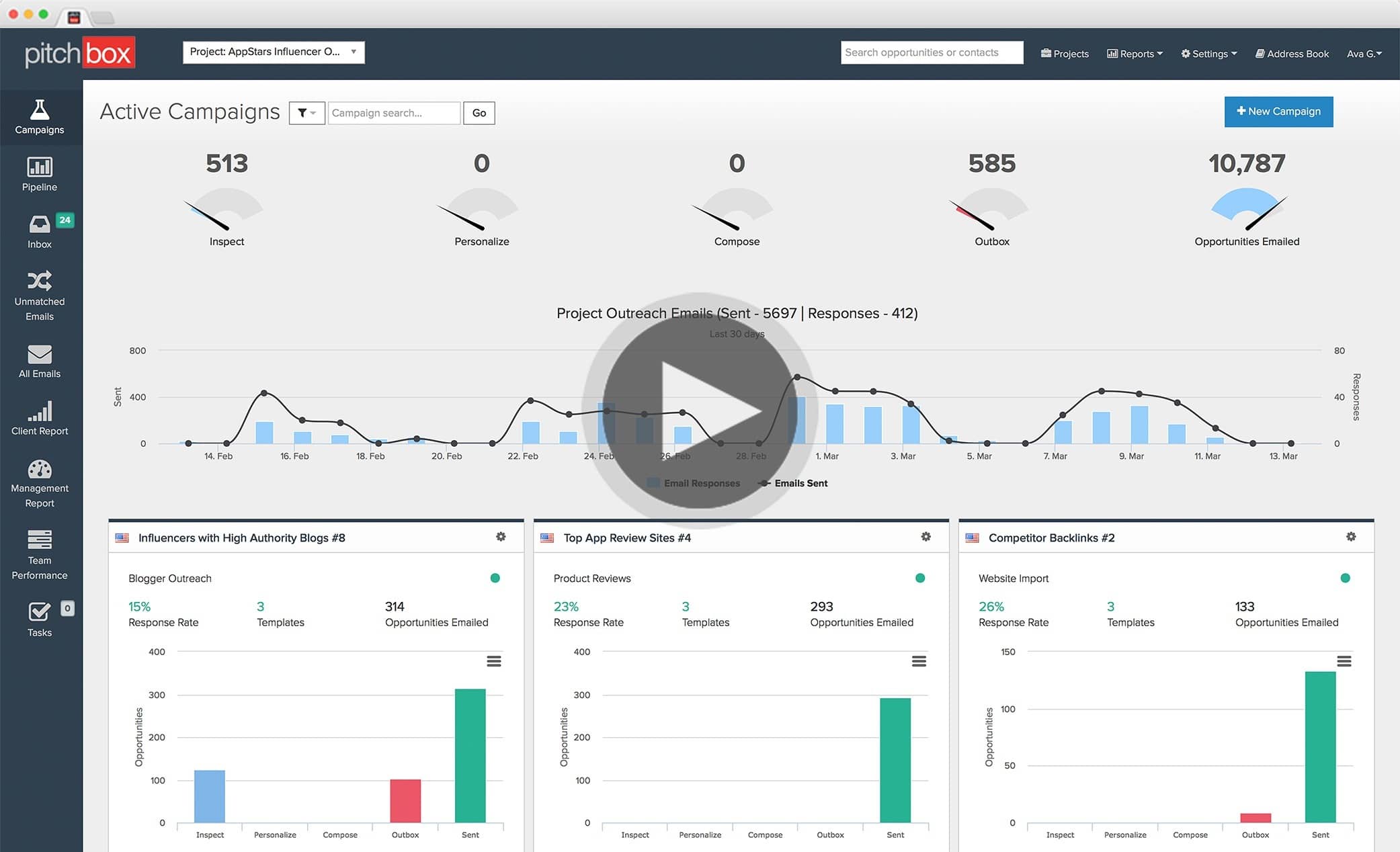
Pitchbox stands at the forefront of AI-powered link building and outreach automation in 2026. The platform helps users connect with influencers, bloggers, and publishers to secure valuable backlinks.
Pitchbox Key Features
The platform’s AI Personalization extracts specific information from websites and creates hyper-relevant outreach emails at scale. A custom-tuned AI model uses data from millions of outreach emails and their results to achieve higher participation rates. Response rates increase by approximately 62% through the automated follow-up system. The platform merges with major SEO tools like Moz, Majestic, SEMRush, Ahrefs, and LinkResearchTools. Users can access 20+ prospecting options with advanced contact discovery capabilities.
Pitchbox Pros and Cons
Pros:
- Automated follow-ups save countless hours
- A proprietary scoring algorithm ranks contacts by Outreach Engagement Probability
- Immediate monitoring of backlink health
- Simplified processes based on GTD methodology
Cons:
- The price point is too high for freelancers and small teams
- New users face a learning curve
- Auto-replies sometimes inflate reply tracking
- Filter settings determine prospect quality
Pitchbox Pricing
Pricing tiers include:
- Basic Plan: USD 195.00 monthly
- Small Business: USD 295.00 monthly
- SEO Agency: USD 395.00 monthly
- Enterprise: USD 1,500.00 monthly
Pitchbox Best For
SEO agencies managing multiple link-building campaigns will find Pitchbox invaluable. Digital marketing teams that need systematic outreach processes benefit from the platform. Businesses committed to scaling their link-building operations will see the most value.
10. Ranking Raccoon
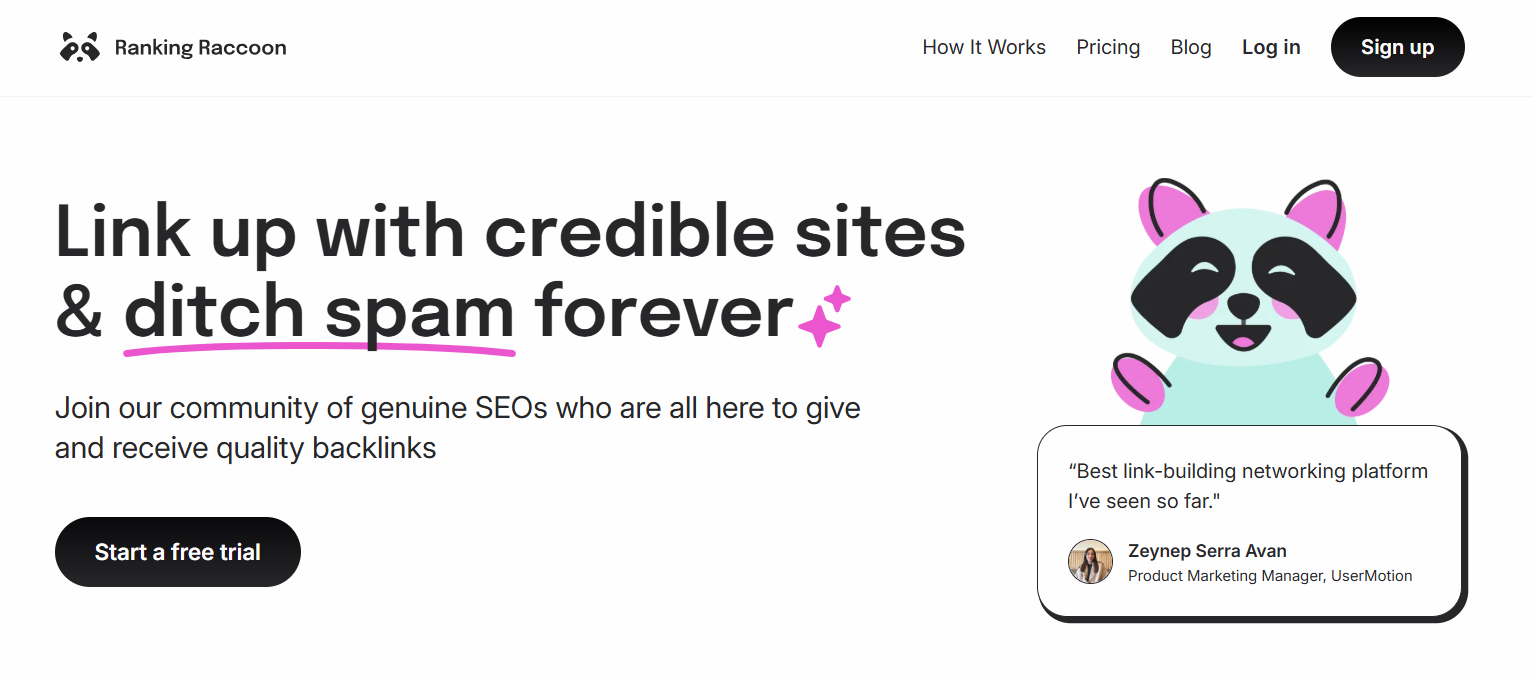
Ranking Raccoon brings a fresh take on link building with its community-driven platform. The backlink networking tool connects users with verified site owners and eliminates the hassle of cold outreach.
Ranking Raccoon Key Features
The platform’s team manually reviews each registered site to check metrics, design quality, and niche relevance. Smart AI technology suggests the most relevant sites based on topical match, which helps users find perfect link placements quickly. Users can directly message site admins and receive instant confirmation once their links go live. The platform’s success rates show that 71% of link requests get replies within a week, and 35% become published links.
Ranking Raccoon Pros and Cons
Pros:
- Reply rates 11x higher than cold emails
- No cold outreach saves valuable time
- LinkedIn verification builds a trustworthy community
- Expert-vetted websites available in 54 niches
Cons:
- Site discovery needs better filters
- Email and notification system requires updates
- Opportunities limited to platform community members
Ranking Raccoon Pricing
- Pro: USD 25.00/month – Unlimited link requests, browse verified sites
- Lite: Free forever – Receive link requests without starting new chats
- 7-day free trial available (no card required)
Ranking Raccoon Best For
The platform serves small business owners who need backlinks, SEO professionals building their network, and digital agencies seeking client backlinks in 54 different niches.
11. Indexly
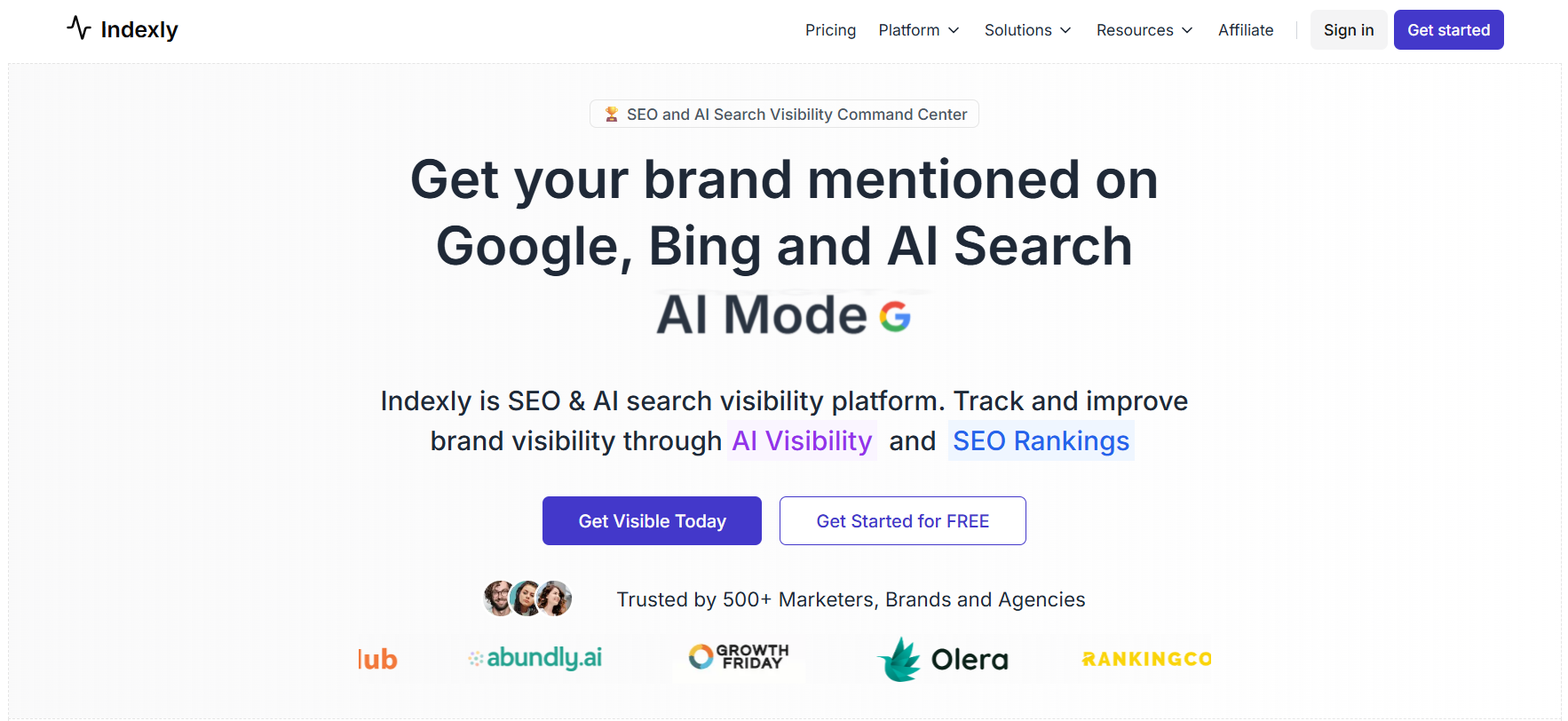
Indexly brings together traditional SEO and AI visibility tracking on a single powerful platform. Brands can learn about their visibility on both search engines and AI models through this comprehensive tool.
Indexly Key Features
The platform speeds up page indexing through Google Indexing API and Bing IndexNow. You can track brand mentions on ChatGPT, Perplexity, Gemini, Claude, and other AI tools. The AI Audit helps you understand your website’s accessibility to AI crawlers like GPTBot and ClaudeBot. You can monitor specific queries and see how AI responses to your brand change over time with the prompt tracking feature. The platform’s sentiment analysis shows you how positively AI systems present your brand.
Indexly Pros and Cons
Pros:
- Automation reduces indexing efforts by 100%
- Pages get indexed 75% faster
- SEO rankings improve by about 30%
- Many users see their organic traffic double
- Works with multiple search engines and AI platforms
Cons:
- No permanent free plan exists
- New users need training for advanced features
- Full AI visibility features need higher-tier plans
- Trial period leads to paid subscription
Indexly Pricing
Indexly’s 2026 pricing comes in four tiers:
- Solo: $49/month – 3 sites, automated indexing, keyword tracking
- Team: $99/month – 10 sites, website audit, backlink intelligence
- Business: $149/month – 20 sites, AI audit, prompt tracking
- Agency: $249/month – 50 sites, whitelabel reports, brand sentiment analysis
Indexly Best For
SEO agencies managing multiple client websites will get the most value from Indexly. News sites, publishers, and content creators need quick indexing to stay competitive. E-commerce stores can keep their product pages easily discoverable. SaaS companies can track both SEO performance and AI visibility from one dashboard.
Comparison Table
| Tool Name | Key Features | Starting Price | Main Pros | Main Cons | Best For |
| Writesonic | GEO tracking across AI platforms AI Article WriterSite Audit tool Action Center |
$49/month | All-in-one tool Strong SEO focus Expandable |
Restrictive credit system Learning curve Interface gets cluttered at times |
Content marketers who need automation + SEO insights |
| AirOps | No-code Workflow Builder Grids Content Planner Human-in-loop review Answer Engine Visibility |
Free (1,000 tasks) | Saves lots of time Direct CMS publishing Brand quality control |
Steep learning curve Limited pricing transparency Gets pricey with scaling |
Content-heavy teams that need systematic scaling |
| Rankscale.ai | Multi-engine brand monitoring Competitor analysis Citation analysis Website AI audit |
$20/month | Clear agency value Practical competitor data Team collaboration tools |
Limited documentation Credit model limits Technical complexity |
Agencies handling multiple brands |
| SE Ranking | AI Search Toolkit Content Editor AI Writer Keyword research |
$65/month | Flexible pricing User-friendly interface High data accuracy |
Learning curve Smaller backlinks database Complex data presentation |
SEO specialists and agencies |
| Clearscope | Content Editor Content Inventory Draft with AI AEO capabilities |
$129/month | Optimized workflows User-friendly interface Strong support team |
No backlink analysis Learning curve No free trial |
Content teams focused on search visibility |
| Ahrefs AI Helper | Search intent matching Content grading AI chat integration Topic coverage scoring |
$99/month (add-on) | Easy workflow integration Automated competitor analysis Search intent insights |
High combined cost Variable value Imprecise content scores |
SEO experts in Ahrefs ecosystem |
| Whatagraph | AI report generation IQ ChatSmart Builder 55+ platform connections |
Free tier available | 40hr monthly time savings Client-friendly dashboards Excellent support |
Expensive scaling Connector issues Limited customization |
Marketing agencies that handle client reporting |
| DataforSEO | AI Optimization API LLM Responses API Multiple LLM integration Pay-as-you-go model |
$50 minimum | Flexible pricing Live data Extensive API selection |
Minimum payment required Technical complexity Limited visuals |
Marketing tool developers |
| Pitchbox | AI Personalization Automated follow-ups Contact discovery Multi-tool integration |
$195/month | Time-saving automation Proprietary scoring Live monitoring |
High price point Learning curve Reply tracking issues |
SEO agencies handling link-building |
| Ranking Raccoon | Manual site review AI site matching Direct messaging LinkedIn verification |
$25/month | High success rate No cold outreach Verified websites |
Filtering issues Poor notification system Limited opportunities |
Small businesses looking for backlinks |
| Indexly | Multi-engine indexing AI mention tracking AI Audit Prompt tracking |
$49/month | Fast indexing Multi-platform support Automated processes |
No free tier Training needed Feature restrictions |
SEO agencies managing multiple sites |
Conclusion
AI tools are now a must-have in every marketer’s toolkit for 2026. The landscape has changed dramatically, and success now depends on visibility in both traditional search and AI-generated answers from platforms like ChatGPT, Perplexity, and Google AI Overviews. Our tests of these 11 top AI marketing tools revealed several patterns. Writesonic and AirOps stand out at content creation with built-in SEO optimization. Rankscale.ai and SE Ranking specialize in tracking AI visibility across platforms. Clearscope and Ahrefs AI Content Helper help you create content that appeals to both human readers and AI systems. Teams don’t deal very well with reporting, but Whatagraph saves up to 40 hours monthly through automated data visualization. DataforSEO provides economical API solutions for developers building custom tools. Link building specialists will appreciate Pitchbox’s AI personalization and Ranking Raccoon’s community-driven approach. Your choice ends up depending on your specific marketing goals. Teams managing multiple websites benefit from Indexly’s detailed indexing and visibility tracking. Content-heavy organizations could find AirOps’ workflow optimization a game-changer. The marketing world won’t wait for those slow to adapt. AI search adoption nears 1 billion users, and 75% of marketers already use AI for SEO workflows. Start with one tool that solves your biggest problem, then expand as needed. Note that success isn’t just about adopting AI technology. Your focus should stay on delivering value to your audience. These tools simply help you reach them better across traditional and AI-powered channels. Which AI marketing tool caught your eye? The right choice today could revolutionize your visibility tomorrow.
Key Takeaways
After testing 11 leading AI marketing tools, here are the essential insights every marketer needs for 2026:
- AI visibility is now mandatory: With AI search adoption nearing 1 billion users and 75% of marketers using AI for SEO, optimizing for platforms like ChatGPT, Perplexity, and Google AI Overviews is no longer optional.
- Choose tools based on specific needs: Content creators should consider Writesonic or AirOps for automation, while agencies tracking multiple brands benefit from Rankscale.ai or SE Ranking’s comprehensive monitoring.
- Generative Engine Optimization (GEO) is the new SEO: Success requires tracking brand mentions across AI platforms, not just traditional search rankings, as 88.1% of AI Overview queries are informational.
- Integration saves time and money: Tools like Whatagraph can save teams up to 40 hours monthly on reporting, while platforms offering direct CMS publishing eliminate manual handoffs.
- Start small, scale strategically: Begin with one tool addressing your biggest challenge – whether that’s content creation, AI visibility tracking, or link building – then expand as your needs grow.
The marketing landscape has fundamentally shifted from ranking pages to providing the best answers across AI platforms. These tools bridge the gap between traditional SEO and AI search optimization, helping brands maintain visibility in an increasingly AI-driven world.
FAQs
Q1. How has AI changed the marketing landscape in 2026?
AI has fundamentally shifted marketing from ranking pages to providing the best answers across AI platforms. With nearly 1 billion AI search users, optimizing for ChatGPT, Perplexity, and Google AI Overviews is now essential for visibility.
Q2. What is Generative Engine Optimization (GEO)?
GEO is the new SEO for 2026. It involves optimizing content to appear in AI-generated answers and tracking brand mentions across AI platforms, not just traditional search rankings.
Q3. Which AI marketing tool is best for content creation and SEO?
Writesonic and AirOps excel at content creation with built-in SEO optimization. They offer features like AI article writing, workflow automation, and visibility tracking across multiple AI platforms.
Q4. How can marketers save time with AI tools?
AI tools like Whatagraph can save teams up to 40 hours monthly on reporting through automated data visualization. Other platforms offer direct CMS publishing and automated follow-ups, significantly reducing manual work.
Q5. What should marketers consider when choosing an AI marketing tool?
Marketers should choose tools based on their specific needs, such as content creation, AI visibility tracking, or link building. It’s recommended to start with one tool addressing the biggest challenge and then expand as needs grow.
Mike Khorev
I'm an SEO Consultant with over 10 years' experience, including both SEO agency-side and in-house SEO expert. I work predominantly with B2B, startups, SAAS, IT, technology and software companies who are looking to acquire new customers and add zeros to the revenue with SEO and content marketing. If you are looking for someone who is results orientated and has experience in growth marketing and sales pipelines, then connect with me on LinkedIn and schedule a free SEO consulting session!
Recommended Posts
How to Master Perplexity AI SEO: Actual Ranking Signals Explained
February 20, 2026